← All boards

ESP-KVM is free, open-source firmware that turns an ESP32-P4 board into an IP-KVM: another computer's screen, keyboard and mouse in your browser, from the BIOS up. The WarpKVM rk628-22p is the part that brings the computer's HDMI in. What it does → Try the demo →

WarpKVM rk628-22p
The capture - open hardware, RK628H, not tested yet

WarpKVM rk628-22p

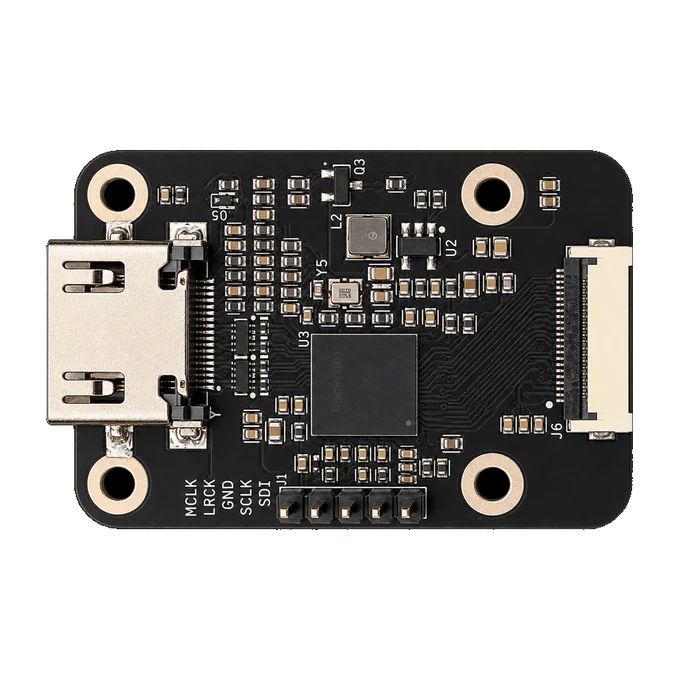
An open-hardware RK628H board with a 22-pin connector, schematics and gerbers published. The driver is written but has never run on one.

FamilyAll WarpKVM parts
BridgeRockchip RK628H
InputHDMI
15-pin ribbonno; a 22-to-15-pin ribbon for a board with the wide connector
22-pin ribbonyes (0.5 mm), wired for four lanes; ESP-KVM uses two
24-pin ribbon (M5Stack)no
ESP32-P4rev 3.x; rev 1.x with MJPEG only from 0.91.1 (the chip sends only YUV422)
HDMI audioI2S header, wired to the P4 like the C790's; never tried
HDMI-CECthrough the chip's own controller, if the board wires the pin; never tried
Size45 x 30 mm

Design files on GitHub Compare

Have one? Nobody has run ESP-KVM on this yet. If you try it, tell me how it went, whether it worked or not: one report moves it to tested or gets the bug fixed. Post your result →

Not tested on hardware. It may not work. I do not have this board. The driver is written from what Rockchip's own Linux driver does, and every image from 0.91.0 on carries it. To make it work I need the log lines tagged rk628, from start-up to plugging a source in.

The WarpKVM team published three RK628 boards as open hardware, under CERN-OHL-S. The 22-pin one is the one an ESP32-P4 board takes. The 30-pin one fits no ESP32-P4 board I know, and the two-link one is for 4K60, which two lanes cannot carry.

Good to know

  • RK628H, not RK628D. The design takes either chip. This driver knows only the F/H generation: an RK628D is found, named in the log and left alone.
  • MJPEG only on a rev 1.x ESP32-P4, from 0.91.1. The RK628 sends only YUV422, and before chip rev 3.0 the H.264 encoder needs RGB. The same path, tried with a TC358743 sent to YUV422, gives about 7 fps at 1080p.

The photo is WarpKVM's, from their repository (CERN-OHL-S-2.0).

Boards it works with