← All boards

ESP-KVM is free, open-source firmware that turns an ESP32-P4 board into an IP-KVM: another computer's screen, keyboard and mouse in your browser, from the BIOS up. The Waveshare HDMI to CSI Adapter (B) is the part that brings the computer's HDMI in. What it does → Try the demo →

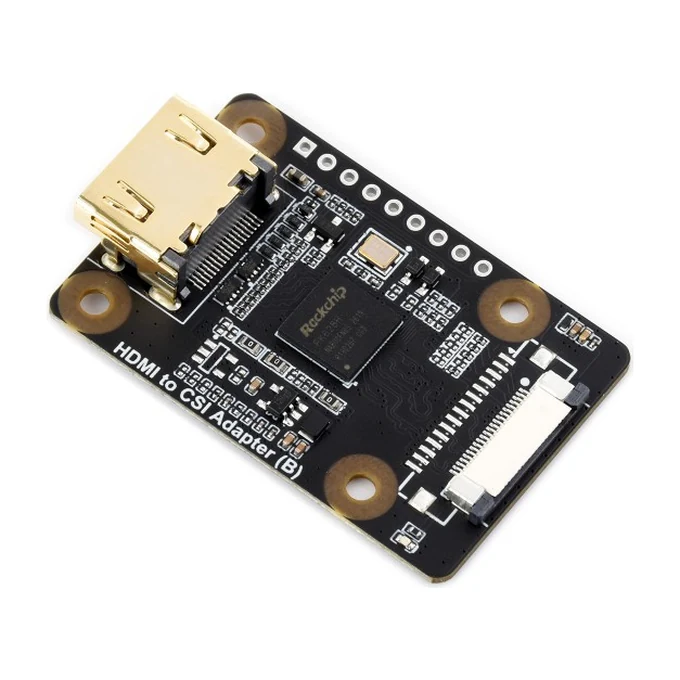
Waveshare HDMI to CSI Adapter (B)
The capture - RK628H, not tested yet

Waveshare HDMI to CSI Adapter (B)

Waveshare's adapter with a Rockchip RK628H. The driver is written but has never run on one.

FamilyAll Waveshare parts
BridgeRockchip RK628H
InputHDMI
15-pin ribbonno; a 22-to-15-pin ribbon for a board with the wide connector
22-pin ribbonyes (0.5 mm, the Pi 5 kind)
24-pin ribbon (M5Stack)no
ESP32-P4rev 3.x; rev 1.x with MJPEG only from 0.91.1 (the chip sends only YUV422)
HDMI audioI2S, wired to the P4 like the C790's; never tried
HDMI-CECthrough the chip's own controller, if the board wires the pin; never tried

Waveshare product page Compare

Have one? Nobody has run ESP-KVM on this yet. If you try it, tell me how it went, whether it worked or not: one report moves it to tested or gets the bug fixed. Post your result →

Not tested on hardware. It may not work. I do not have this board. The driver is written from what Rockchip's own Linux driver does, and every image from 0.91.0 on carries it: plug the adapter in and the firmware looks for it by itself, after the TC358743 and the LT6911D. To make it work I need the log lines tagged rk628, from start-up to plugging a source in.

Good to know

  • MJPEG only on a rev 1.x ESP32-P4, from 0.91.1. The RK628 sends only YUV422, and before chip rev 3.0 the H.264 encoder needs RGB. The same path, tried with a TC358743 sent to YUV422, gives about 7 fps at 1080p.
  • Two lanes, 1080p. The chip sends at 1296 Mbit/s on two lanes, which carries 1080p60. A faster source, 4K say, is scaled down to 1080p on the chip.
  • The same chip as the Radxa adapter and the WarpKVM boards, so one driver covers all three.

Boards it works with