0.53.0 - The status OLED can sit on its own I2C bus, for the M5Stack Mini OLED
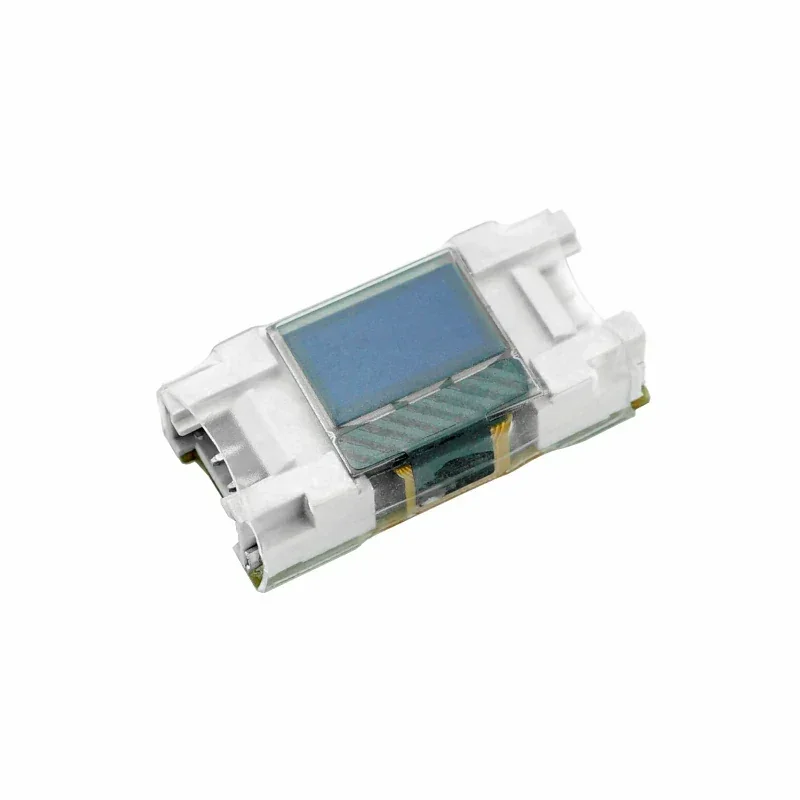
ESP-KVM can drive a small OLED that shows the device's address, the link, the capture and its health. Until now that OLED had one place to live: the I2C bus the capture chip is on. That was not a shortcut - it means the panel needs no pins, no soldering and no setting, on every board.
The M5Stack Unit PoE-P4 does not work that way. Its capture bus goes to the add-on through a level shifter, and the socket you would actually plug a panel into is the Grove port, which is a second I2C bus: SDA on GPIO 53, SCL on 54. M5Stack sell a 0.42″ 72×40 OLED that fits it with a cable and nothing else.
So an OLED can now have a bus of its own. Two new settings under Display, OLED SDA and OLED SCL, and on the M5Stack firmware they are already set to the Grove pins. Leave them at None and nothing changes: the panel is looked for on the capture bus, as before. The panel itself is in the list as "SSD1315 72x40".
I have not had that panel in front of me yet. The size was already supported - it is the same 28-column offset as the SSD1306 version - so what is new here is the bus, not the glass.
Two things a unit on the desk found
The USB icon was grey until you took control. The device tells the console whether the target sees the keyboard, and it sent that to the console holding control and to no other. A second browser tab, or a tab you had only opened to look, showed the icon grey with "no power on the target's port" - which is the worst of the three things that icon can mean, and it was not true. It goes to every open console now.
A refresh rate that was never real. On the Unit PoE-P4 the console said the input was 1920x1080p15 for a 60 Hz source. The rate is worked out from what the capture chip calls its pixel clock, and on this chip that register is not one: it reads the same four bytes whatever is on the wire, with a mode, without one, with the cable out. They look like a firmware date. So the rate is reported as unknown now, which is the honest answer, and the hunt for the register that really says what the input is doing goes on.