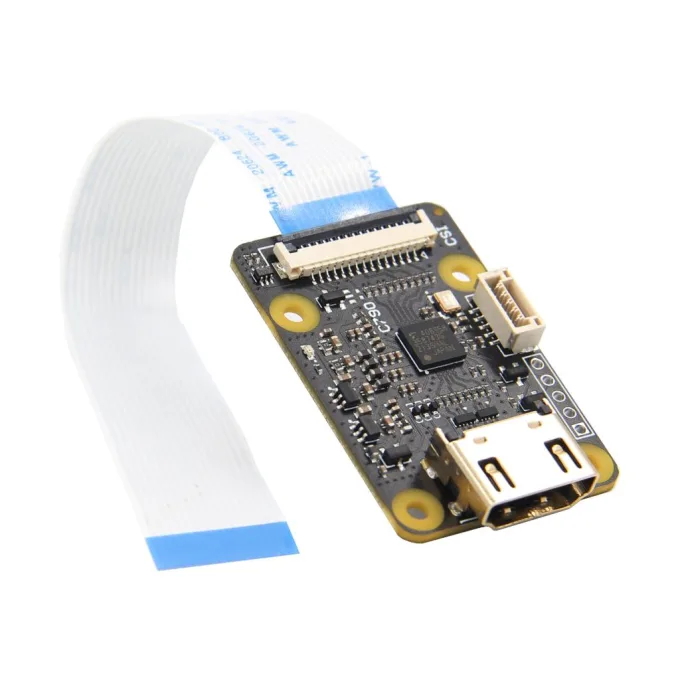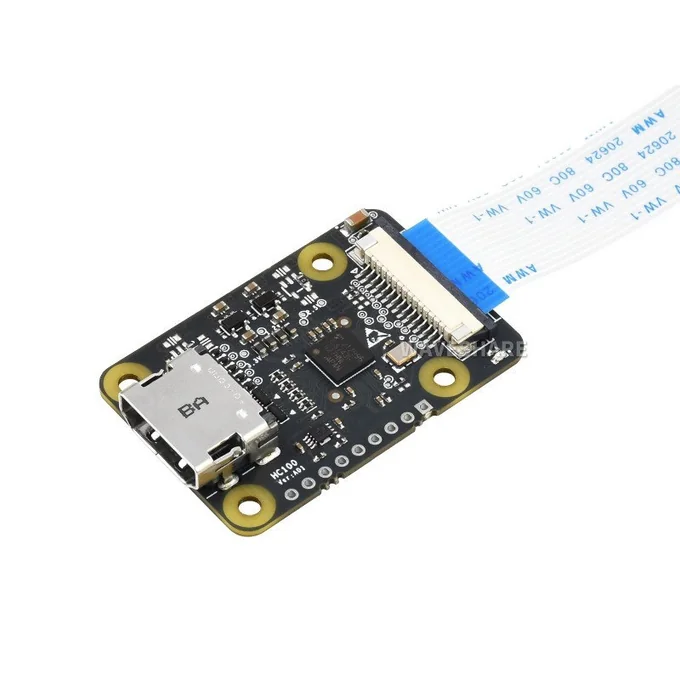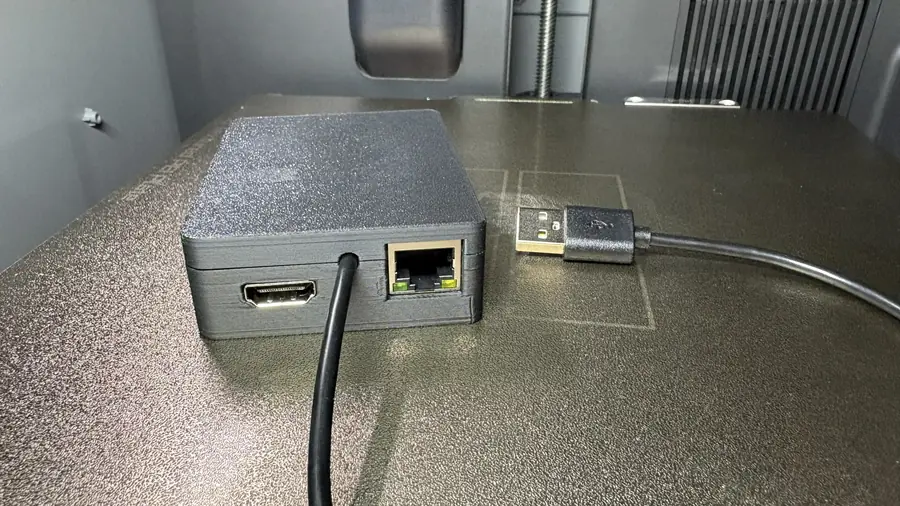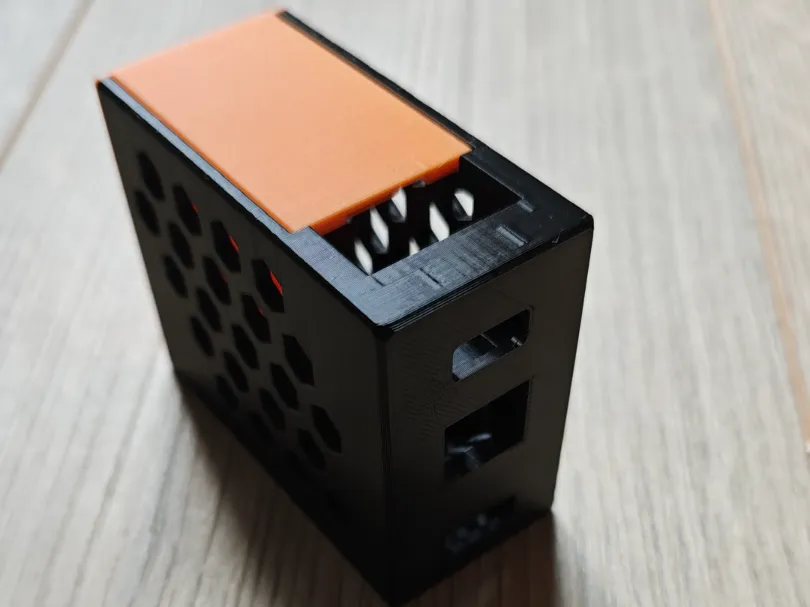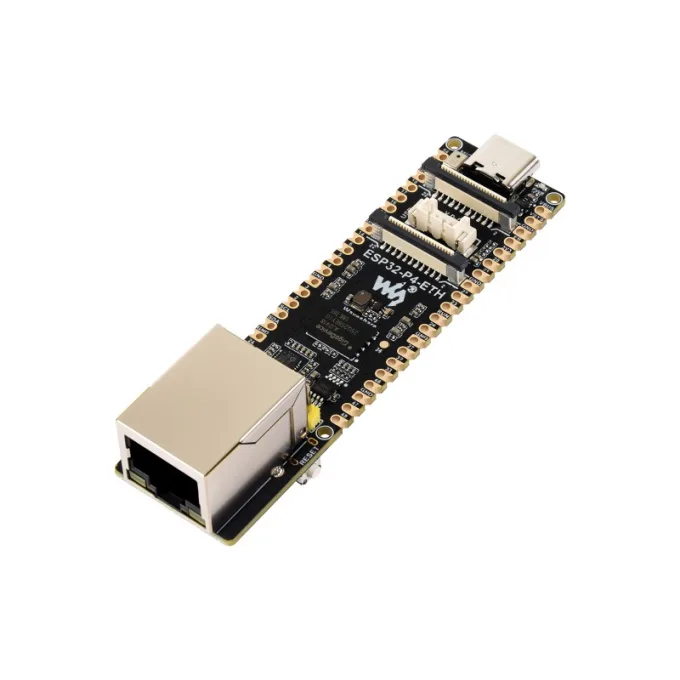
The board ESP-KVM was written on, and the default image: the flasher offers it first. Ethernet only, no Wi-Fi.
Wiring
- The USB-C port is the flashing and console bridge (CH343), not the target's port.
- The USB 2.0 OTG that goes to the target is on the MX1.25 connector, so the lead is MX1.25 to USB-A.
- The target's 5 V comes back down that lead: pulling it at the target's end restarts the KVM.
- The C790's 15-pin ribbon goes into the camera connector.
Measured
MJPEG at quality 70, rev 1.3 chip:
| Mode | fps | Bitrate |
|---|---|---|
| 1920x1080 | 20 | 17.5 Mbit/s |
| 1280x720 | 45.5 | 16.8 Mbit/s |
| 1024x768 | 56 | 17.6 Mbit/s |
A still screen costs nothing, since unchanged frames are skipped. H.264 on this chip runs at 5-7 fps at 1080p and 17 fps at 720p, but an idle desktop costs 170 kbit/s against MJPEG's 8.5 Mbit/s: it is for narrow links, not for smoothness. A rev 3.x chip does 22-24 fps at 1080p.
Good to know
- The BOOT button (GPIO 35) is also an Ethernet pin, so the device reads it once, early in start-up. For the password reset: press reset, release, then hold BOOT.
- The microSD writes at 40 MHz because the slot's power comes from the chip's LDO 4.
- Waveshare ships rev 1.3 today, and the product code does not tell the revision. The boot log prints
Chip rev:.
Another ESP32-P4 board with Ethernet and the same camera connector can run it too. The pins are set in menuconfig, not in the code.