Tagged network
all 74hardware 30console 22video 22update 15network 13diagnostics 11input 11storage 10security 8display 7media 6community 4home-assistant 4screen-text 4mobile 3vpn 3boards 2power 2api 1dashcam 1demo 1explainer 1hdmi 1m5stack 1notifications 1ota 1recording 1tailscale 1terminal 1
-
0.65.0 - video over Tailscale that keeps up
Frame acks, so a slow link shows the newest frame instead of a queue of old ones, and a run of Tailscale fixes that took video between two ESP32-P4 devices from 1-3 fps to 11-14.
-
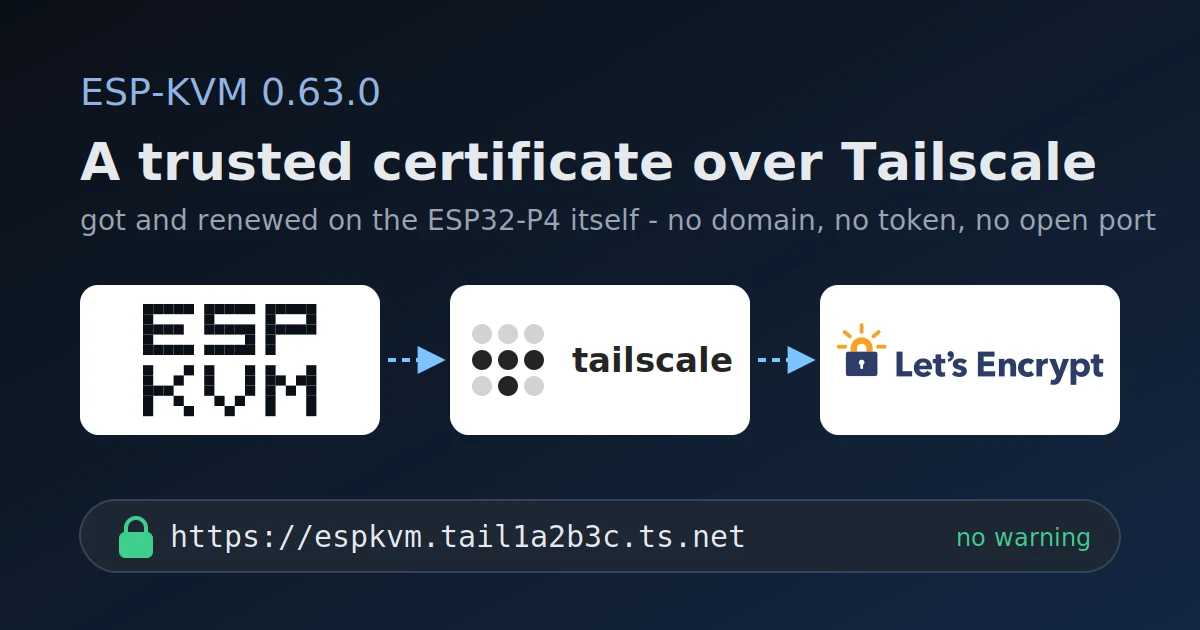
0.63.0 - a Let's Encrypt certificate over Tailscale
The device gets a real certificate for its tailnet name and renews it itself, so a browser on the tailnet opens the console with no warning and nothing to import.
-
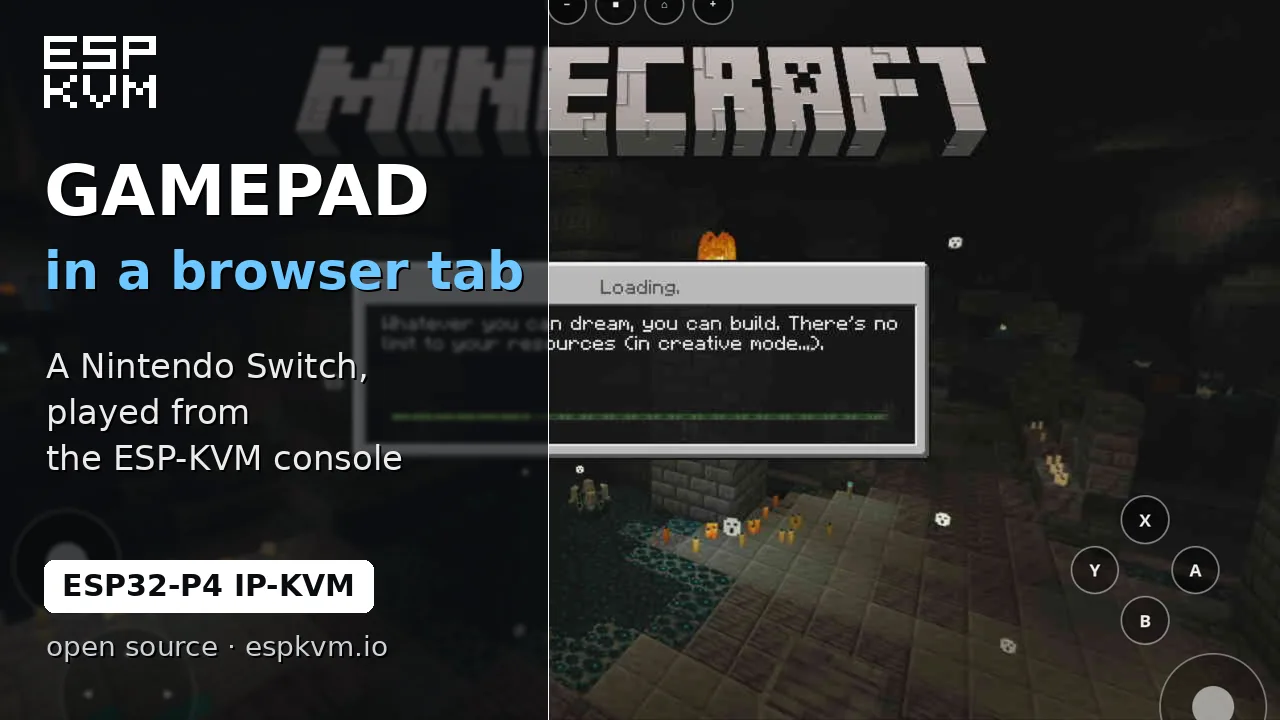
0.59.0 - a gamepad for a console
The device can be a game controller too - a HORI pad for a Nintendo Switch, or an Xbox 360 pad for Windows and a Steam Deck - driven from the console. Plus Ethernet with WiFi as the backup.
-
0.56.2 - Wi-Fi that holds a stream
Over Wi-Fi the P4 ran out of internal RAM as soon as the console loaded. Two buffers moved to PSRAM, and a FireBeetle 2 that stalled now streams without a break.
-
0.41.1 - a fix that was there and did nothing
I shipped a WiFi fix and never called the function. The person who reported the bug found the missing line himself. While checking that release I found a crash that had been hiding behind three different symptoms.
-
0.40.0 - two more boards, one with no wire at all
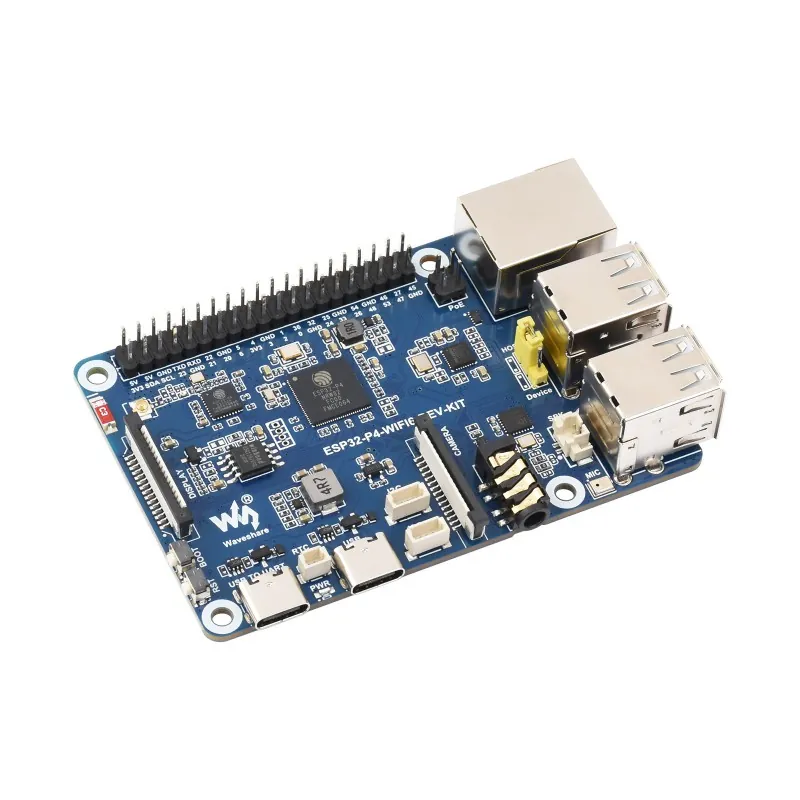
A dev kit that carries both links, and a board whose only way in is WiFi. The second one came from the person who owns it.
-
0.31.0 - updates that take on the first try
A chip fault during its own restart made updates look like they reverted themselves. Fixed, along with uploads that died part-way over HTTPS.
-
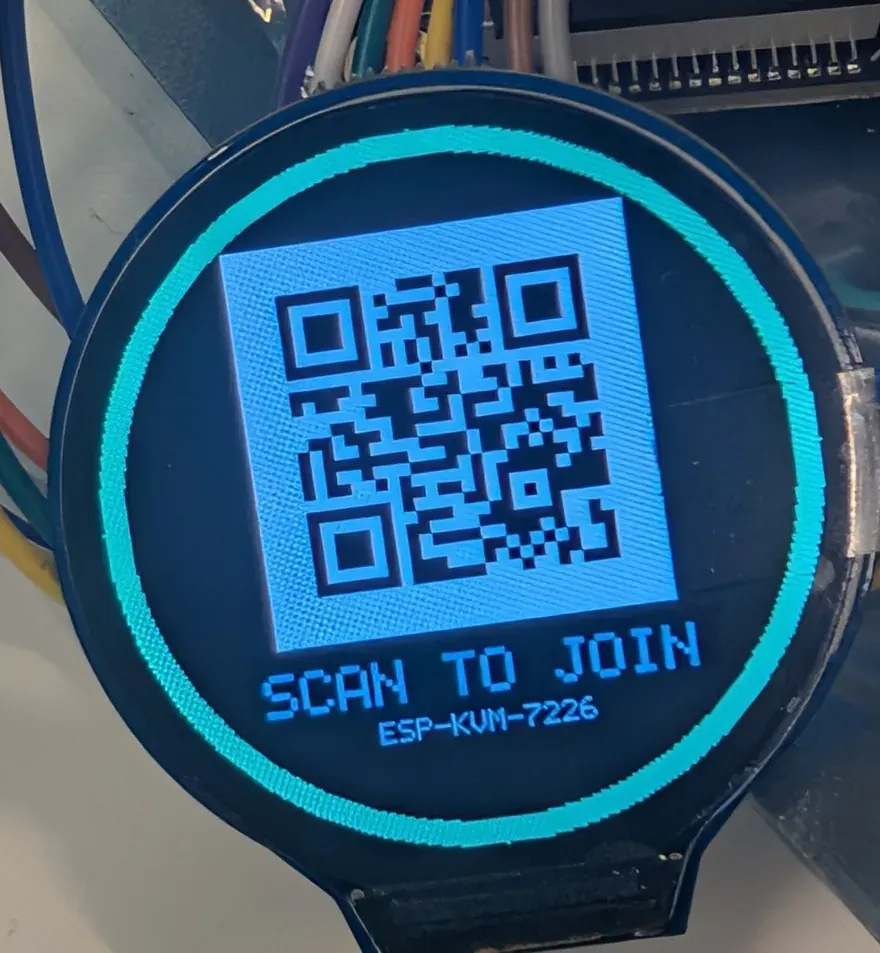
0.24.0 - point a phone at the screen to get in
The round LCD shows the rescue hotspot as a QR code, the certificate finally names the address DHCP gave the device, and the reset button shows that it heard you.
-
0.23.0 - IPv6
The device answers on IPv6 as well as IPv4, on Ethernet and WiFi, with a certificate that names the address and a network panel that hands it to you.
-
0.17.0 - WiFi, and a hotspot for when it fails
On boards with an ESP32-C6 the KVM can run over WiFi, put up its own hotspot when the network is gone, and open the console on your phone by itself.
-
0.16.0 - Tailscale, right on the device
The KVM joins your tailnet by itself - no gateway, no VPS, no port forwarding - and the console installs to a phone's home screen.
-
0.14.0 - WireGuard, and an API simple enough for a script
Reach the KVM over a WireGuard tunnel without opening a port, and drive the target with plain HTTP calls instead of a binary protocol.
-
0.4.0 - Wake-on-LAN and a fixed address
Power a sleeping machine on without any wiring, and give the KVM a static IP that a typo cannot turn into a brick.